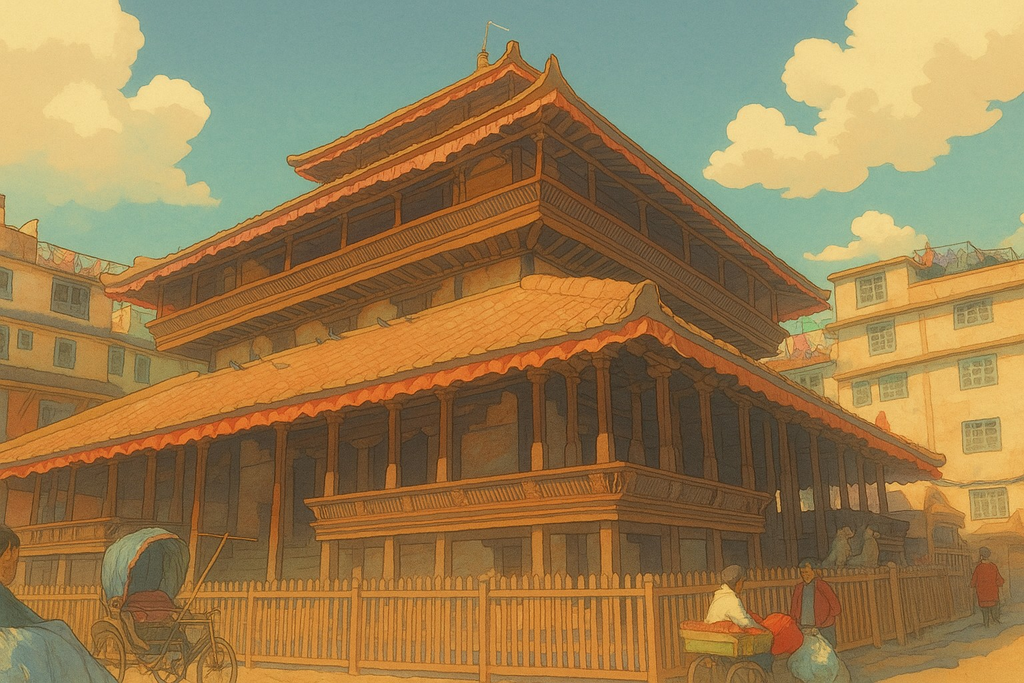
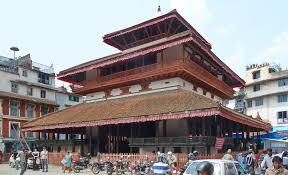
Kasthamandap is a historic wooden pavilion located in Maru Tole, near Hanuman Dhoka Durbar Square in Kathmandu, Nepal. Believed to be built in the 12th century during King Laxmi Narsingh Malla’s reign, it is said to have been constructed from the wood of a single sal tree. The name "Kasthamandap" comes from Sanskrit, meaning "Wooden Pavilion," and it is also believed to be the origin of Kathmandu's name.
Originally used as a public shelter, it also housed a shrine dedicated to Gorakhnath, a revered Hindu yogi. The three-tiered pagoda-style structure was a fine example of traditional Newar architecture, built entirely without nails.


According to legend, it was constructed from the wood of a single sal tree.
The structure was originally built as a public shelter or resting place, but it also became a site of religious importance.
It later housed the shrine of Gorakhnath, a revered yogi in Hindu tradition.

It was a three-tiered traditional pagoda-style building.
Entirely made of wood, without the use of nails.
Open on all sides, supported by large wooden pillars.
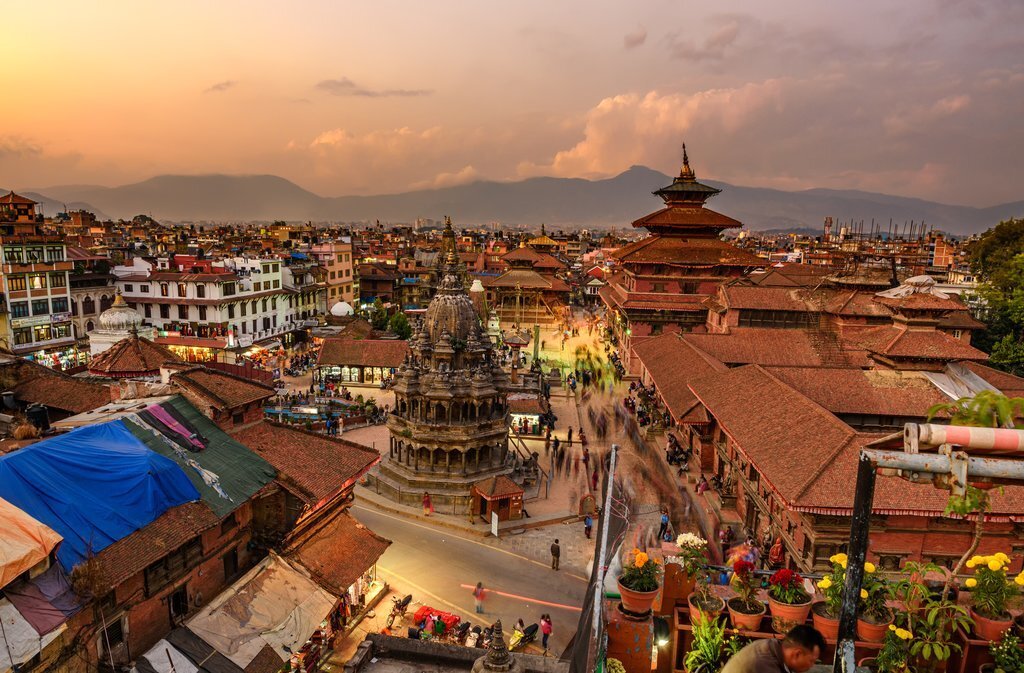
Situated at Maru, near Hanuman Dhoka Durbar Square, a UNESCO World Heritage Site.

Kasthamandap collapsed during the 2015 earthquake but was later reconstructed using traditional methods and materials. The restored structure was reopened in 2021. It holds great cultural, historical, and architectural significance and remains a symbol of Kathmandu’s heritage, resilience, and the incredible craftsmanship of medieval Nepalese artisans.